The last secret of Mussolini
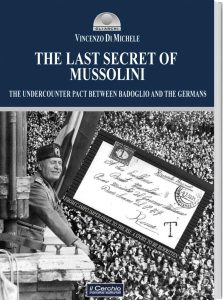 The last secret of Mussolini
A revisionist thesis about “Operazione Quercia” on 12th of september 1943 for the release of Mussolini at Campo Imperatore.
A revisionist thesis on “Operation Oak” (Operazione Quercia) of September 12, 1943, which led to the liberation of Mussolini at Campo Imperatore. In fact, there was an under-the-table agreement between the Italian government and the Germans.
On September 12, 1943, with the famous Operation Oak, a commando of German paratroopers led by Harald Mors and accompanied by Otto Skorzeny liberated Benito Mussolini from his captivity at Campo Imperatore, on the Gran Sasso massif. Official historiography has always depicted this event as a bold, lightning-fast, and flawless military blitz. But was it truly so, or was it rather a charade orchestrated behind the scenes of international diplomacy?
In his investigative essay “Il segreto di Mussolini” (Mussolini’s Secret), historian Vincenzo Di Michele digs into the darkest and most chaotic days of Italian history — those separating the fall of Fascism on July 25 from the armistice of September 8 — to unveil a profoundly different and uncomfortable truth. The author challenges the thesis of the military coup de mano, presenting evidence and documents in support of a silent, “secret agreement” between the leaders of the Italian government (King Victor Emmanuel III and Marshal Badoglio) and the German forces.
The Duce’s imprisonment on the Gran Sasso, where he was guarded by as many as 250 Italian carabinieri and police officers who did not fire a single shot upon the arrival of the German gliders, is reinterpreted as an agreed-upon handover. Di Michele analyzes the details of this “open secret,” revealing how Mussolini’s liberation was the unwritten quid pro quo to allow the safe escape of the Royals and the government from Rome toward Brindisi, thereby avoiding immediate retaliation from Hitler.
Through a rigorous examination of sources, diaries of the era, and inconsistencies in the protagonists’ testimonies, the book maps out the “ten unresolved mysteries” surrounding Mussolini during those crucial days. From the ambiguous behavior of the Italian guards to the encrypted messages, the work reads like a true historical mystery that dismantles the propaganda of the time.
“Il segreto di Mussolini” is a text of strong revisionist (in the most noble sense of the term) and historiographical impact. An essential work for anyone wishing to understand the true compromises and shadow pacts upon which the fate of the Italian nation was played out at the moment of its dramatic structural collapse.